Real Estate Broker MD VA DC

Real Estate Broker MD VA DC
Sirous M Jafari

Let my over 20 years of real estate experience get you the Most for you...

Pages

Sunday, April 13, 2014

Speak Intelligently about the Home Sales Numbers


It is crucially important that, as experts in the real estate field, we can articulate what is actually taking place in the housing market…especially when news headlines are causing confusion. That is definitely the case right now when it comes to existing home sales numbers.
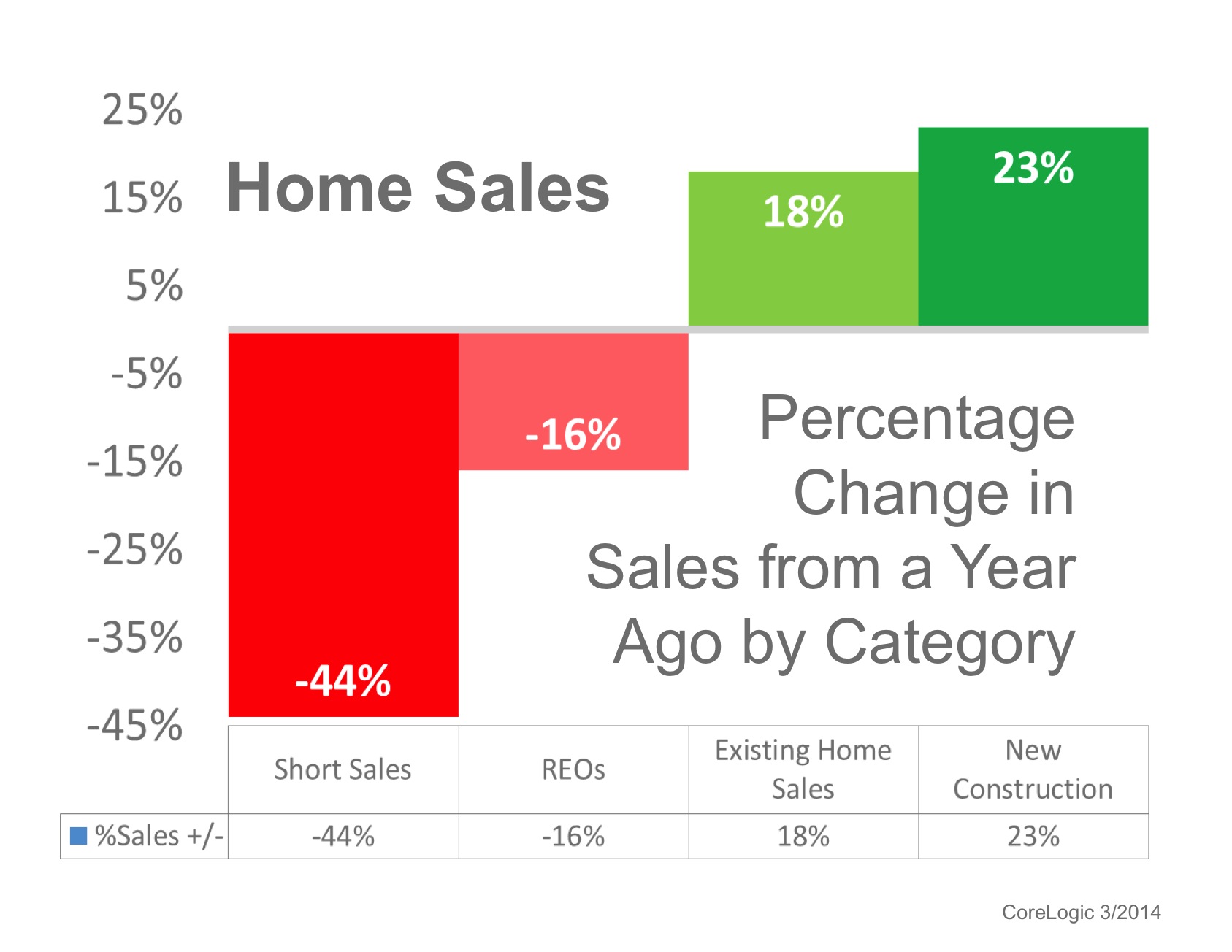
Overall, sales volumes are down. We realize that. However, a closer look at the numbers show that certain categories and price ranges are down while others are up.
Below is CoreLogic’s breakdown of recent sales compared to last year by category. As we can see, distressed property sales are down while non-distressed property sales are up.
Slide1
Now let’s look at NAR’s breakdown of recent sales by price point. As we can see, lower priced homes (distressed properties?) are down while every category over $250K increased.
Slide2
Let’s make sure we promote what is actually happening with home sales to consumers in our markets.

The most recent projection by Freddie Mac calls for 30 year fixed mortgage rates to hit 5.7% by the end of 2015.

Cost-of-Waiting20407Freddie-Mac-Projections20407


HPES

Friday, April 4, 2014

A New Season for Housing Will First-Time Buyers Face Challenges?

A New Season for Housing
Will First-Time Buyers Face Challenges?


A New Season for Housing -  Will First-Time Buyers Face Challenges?

Spring is officially here. The warmer season will hopefully bring a much-needed warm-up to the housing market, which suffered from the harsh winter weather.

Weather, tight credit, and higher home prices were the cause for stagnant housing in recent months, according to the National Association of REALTORS® (NAR). February Existing Home Sales fell by 0.4 percent from January to 4.60 million units on an annualized basis. While this figure was in line with estimates, it was still 7.1 percent less than the number of Existing Home Sales registered one year ago.

Weather was also blamed for lower-than-expected Housing Starts in February, reported at 907,000. Housing Starts have been declining since November's annual rate of 1.101 million—the highest since 2008. However, Building Permits, a sign of future construction, increased by 7.5 percent in February to 1.018 million, well above expectations.

Better readings are anticipated in future housing reports, as the weather becomes milder around the nation.

Housing Out of Reach for First-timers?
It seems first-time homebuyers are being squeezed out of the market due to rising home prices and tighter lending requirements.

First-timers accounted for 26 percent of purchases in January, down from 30 percent a year earlier, according to the NAR. This figure is the lowest the NAR has recorded since it began monthly measurements in October 2008, according to Bloomberg.

Strong housing markets are indicated by robust constructions starts, new home sales and first-time homebuyer volume. A worrying trend is that there is insufficient inventory for average priced homes, with home sales over $250,000 increasing by 8.2 percent, and those under $250,000 decreasing by 10.7 percent, according to the NAR.

Prices on the Rise
U.S. home values continue to rise as buyers compete for a limited supply of properties for sale. Prices climbed 12 percent in January from a year earlier, the twenty-third consecutive gain, said Irvine, California-based CoreLogic Inc. last month.

Analysts assert that there aren't enough homes on the market, with recovery efforts since 2008's housing bubble focusing too much on the financing side, and not enough on the physical side. Conditions could improve as building permits are approved and housing starts slowly pick up the pace.

A New Season for Housing Will First-Time Buyers Face Challenges?

A New Season for Housing
Will First-Time Buyers Face Challenges?


A New Season for Housing -  Will First-Time Buyers Face Challenges?

Spring is officially here. The warmer season will hopefully bring a much-needed warm-up to the housing market, which suffered from the harsh winter weather.

Weather, tight credit, and higher home prices were the cause for stagnant housing in recent months, according to the National Association of REALTORS® (NAR). February Existing Home Sales fell by 0.4 percent from January to 4.60 million units on an annualized basis. While this figure was in line with estimates, it was still 7.1 percent less than the number of Existing Home Sales registered one year ago.

Weather was also blamed for lower-than-expected Housing Starts in February, reported at 907,000. Housing Starts have been declining since November's annual rate of 1.101 million—the highest since 2008. However, Building Permits, a sign of future construction, increased by 7.5 percent in February to 1.018 million, well above expectations.

Better readings are anticipated in future housing reports, as the weather becomes milder around the nation.

Housing Out of Reach for First-timers?
It seems first-time homebuyers are being squeezed out of the market due to rising home prices and tighter lending requirements.

First-timers accounted for 26 percent of purchases in January, down from 30 percent a year earlier, according to the NAR. This figure is the lowest the NAR has recorded since it began monthly measurements in October 2008, according to Bloomberg.

Strong housing markets are indicated by robust constructions starts, new home sales and first-time homebuyer volume. A worrying trend is that there is insufficient inventory for average priced homes, with home sales over $250,000 increasing by 8.2 percent, and those under $250,000 decreasing by 10.7 percent, according to the NAR.

Prices on the Rise
U.S. home values continue to rise as buyers compete for a limited supply of properties for sale. Prices climbed 12 percent in January from a year earlier, the twenty-third consecutive gain, said Irvine, California-based CoreLogic Inc. last month.

Analysts assert that there aren't enough homes on the market, with recovery efforts since 2008's housing bubble focusing too much on the financing side, and not enough on the physical side. Conditions could improve as building permits are approved and housing starts slowly pick up the pace.

Sunday, February 2, 2014

Predictions for 2014: Sales Will Surge

1.6 Blog VisualMany housing pundits are calling for home sales to do slightly better in 2014 than they did in 2013. To the contrary, we strongly believe that home sales will skyrocket with increases of 10-15% in 2014. Here are the three categories of buyers we believe will create this strong demand.

The First Time Buyer

The Urban Land Institute recently released a report, Emerging Trends in Real Estate 2014, projecting that 4.48 million new households will be formed over the next three years. Millennials will make up a large portion of these new households. With the economy improving, we believe they will finally be moving out of their parents’ homes and, when they compare renting versus buying, many will choose homeownership.

The Move-Up Buyer

Over the last several years many homeowners were trapped in their home by negative equity. This prevented them from moving up to the home of their dreams. Zillow has justrevealed that home equity increased by $1.9 trillion dollars in 2013 an increase of 7.9% in the last twelve months. With home values rising, this pent-up demand will finally be released and move-up properties will be in high demand.

The Immigrant Buyer

No one knows what will happen with immigration reform. However, we do know what such reform would have on housing demand. A recent study released by the Immigration Task Force of the Bipartisan Policy Center (BPC) found that immigration reform, if passed, would dramatically increase demand for housing units; increasing residential construction spending by an average of $68 billion per year over the next 20 years.
We realize that our projections are based on three situations that are still uncertain. However, we believe that these issues will come to fruition and thereby dramatically increase demand for homeownership.

Friday, January 31, 2014

Read the Fine Print in Your Retirement Plan


Brought to you by
Sirous Jafari, Broker   C (240) 876-3419
The Name Friends recommend!!
Sign UP Newsletter http://bit.ly/1dUI17P
Your Home Search http://bit.ly/1blve6u
Mobile Home Finder http://bit.ly/14lqZbo
Real Estate News http://bit.ly/nF7IVQ
Free Buyer's Guide http://bit.ly/19lT9Db
www.realestatefreesearch.com/
Real Pros
10411 Motor City Drive
Suite 750
Bethesda, MD 20817


Read the Fine Print in Your Retirement Plan

Few of us know all the mechanics of our 401(k) or other retirement plans. Don’t be caught off-guard when changing jobs or getting ready to retire. Here are some important things to know about your plan:
  • Trading limits. Many plans allow you to move money at any time, but some strings are usually attached. It’s generally not advisable to move long-term retirement savings around for short periods of time. If you do want to switch from time to time, keep in mind that your plan may allow only a set number of trades each week, month, quarter, or year.
  • Account valuations. Find out how often the value of your retirement account is calculated. You can get the most out of your money by timing your departure. Most companies value everything the day you retire, but some value your account weekly, monthly, or quarterly.
  • Withdrawal options. Know how to access your money when you need it. Some plans don’t allow retirees to keep their money in place. Instead, they pay out a lump sum to be reinvested elsewhere. Other plans allow retirees to take a stream of payments (so it serves as an income source) while the rest of the money stays in the plan. Be sure to do your homework before your retirement party.

Also in this issue...
Are You Ready for That Promotion?
World's Most Powerful People
3 Strategic Questions
Forget Knitting and Shuffleboard


Are You Ready for That Promotion?

Being offered a promotion is almost always flattering, but accepting it may not always be the best choice for you and your career path. Here are some things to keep in mind when considering a promotion:
  • Are you ready to make the step up? Your boss may be impressed with your recent performance on the job, but does that mean you’re prepared to assume more or different responsibilities permanently? Moving ahead before you are comfortable may lead to career-damaging mistakes.
  • Do you want the additional responsibility? How would the new position change your responsibilities and lifestyle? Would you be expected to work longer hours? Travel more frequently? Supervise others? Manage high-profile (and high-stress) projects? Try to envision how your everyday work and home life would change if you took on the new role.
  • Where could you go from here? The promotion you’ve been offered may represent a step up in the organization, but then what? Could you advance further, or would you be stuck on a plateau? Would you rather make a lateral move to a different department with more room for advancement?
  • Will the role take you away from what you really love? You must consider whether a new job with different responsibilities, and the benefits and pay raise that might accompany the position, would be enough to fill the void if you must let go of other work you truly enjoy.

If you decide to turn down the promotion, meet with your boss personally and let him or her know how flattered you are to be considered for the role. Explain how much you enjoy working for the company and how glad you are to know your contributions are valued. Then, make it clear that you cannot accept this particular offer at this time.
If your boss presses to understand your motivation for refusing the promotion, emphasize that you believe staying in your present position is better for you - and the company. Communicate with your boss frequently about what you’d like to accomplish at the company and what training and experience you need to become a better employee overall.


World's Most Powerful People

Every year, Forbes makes a list of the most powerful people in the world drawn from government, business, religion, and other fields. In 2012, President Obama topped the list, but since then, Russian President Vladimir Putin has moved up to number one. Here are the prominent people who made the top 10:
  1. Vladimir Putin - Russian President
  2. Barack Obama - U.S. President
  3. Xi Jinping - General Secretary of Communist Party of China
  4. Pope Francis - Bishop of Rome
  5. Angela Merkel - German Chancellor
  6. Bill Gates - Co-Chair and Trustee of Bill and Melinda Gates Foundation
  7. Ben Bernanke - Federal Reserve Chairman
  8. Abdullah bin Abdul Aziz Al Saud - King of Saudi Arabia
  9. Mario Draghi - President of European Central Bank
  10. Michael Duke - CEO of Wal-Mart


3 Strategic Questions

You can’t make sound strategic decisions for your organization unless you have a solid understanding of what makes it special and unique. Answer these three fundamental questions:
  1. What value do you provide customers? This is the reason you’re in business - to fill a need for people better than anyone else can. Why should people come to you and not the next business down the road? The answers will let you identify strengths and set priorities more effectively.
  2. What value do you offer your workforce? If you want to attract and retain good people, you have to offer something other employers don’t. A competitive salary is just the start. Employees also appreciate a work atmosphere that encourages innovation, creativity and trust.
  3. What do you have to do better than anyone else? The first two questions lead naturally to this third one. How can you continue to distinguish yourself from your competitors? How can you measure your success in these areas? Re-examine your answers every few months to make sure you’re staying on top of the trends in your industry.


Forget Knitting and Shuffleboard

Some people dream of never working again once they reach retirement. Others - more than you might think - are happy to keep on working. A study conducted by a national life insurance company has found that 40 percent of people planning to retire this year would be happy to keep working past their 65th birthday if given the opportunity. That figure represents 48 percent of men and 32 percent of women.
Money isn’t the main motivator, either. The primary motivation for 68 percent of this year’s retirees is the desire to remain physically and mentally active, although 39 percent just don’t like the prospect of sitting at home, and 54 percent say they simply enjoy working. However, most don’t want to put in the same hours: only 13 percent would be willing to work full-time after age 65.
About 10 percent would consider starting their own business once they retire, and 5 percent are interested in doing more volunteering.

Tuesday, January 28, 2014

INFO THAT HITS US WHERE WE LIVE>>>


INFO THAT HITS US WHERE WE LIVE... Confirming the insight of the Hibernian bard, the housing market happily kept growing in December. Existing Homes Sales went up 1.0%, to a 4.87 million annual rate. For all of 2013, 5.09 million existing homes were sold, up 8.9% from 2012, and the best annual sales level since 2006. Yes, existing home sales have slowed over the past few months, but this situation is not expected to last. Analysts observe that a lack of inventory has been leading some potential existing home buyers to purchase new homes instead. Existing home inventories, in fact, dropped 9.3% in December, close to all-time lows. 

Observers see more homes coming onto the market this year, as prices move higher. Right now,
existing home median prices are up 9.9% versus a year ago, to $198,000. Average prices are up 8.6% over last year. The FHFA index of prices for homes financed with conforming mortgages went up 0.1% in November. This was the smallest hike in 16 months, but the index is up 7.6% over a year ago. Economists expect home prices to keep edging up, though not as much as last year. They feel that as home builders ramp up, the additional supply will slow the rate of price gains compared to last year.

BUSINESS TIP OF THE WEEK... Don't get caught up responding to crises. Instead, have a plan for proactively tackling projects each day. Commit time for every task, then set aside an extra block for unexpected events.

>> Review of Last Week

DOWN DOWN DOWN DOWN... Those four words perfectly describe the four days of the Dow's performance during a trading week shortened by Monday's Martin Luther King Jr. Day holiday. Both the Dow and the S&P 500 suffered their worst weekly losses in more than a year. The tech-y Nasdaq fared better but still lost ground for the week. Some observers explained all the downward motion as merely the start of a stock market correction, following the record setting performances we saw last year. Others felt it reflected continuing economic concerns.

Those worries began with China, thanks to our interconnected global economy. The HSBC Flash PMI reading indicated Chinese manufacturing contracted slightly in January, plus there were concerns over the health of the Chinese shadow banking system. Over here, Existing Home Sales and Leading Economic Indicators were each up slightly, but less than expected. Although weekly jobless claims were up by 1,000, the four-week moving average dropped again from the previous reading, which is definitely a positive.

The week ended with the Dow down 3.5%, to 15879; the S&P 500 down 2.6%, to 1790; and the Nasdaq down 1.7%, to 4128.

Tumbling stocks sent bond prices skyward, with Treasuries in particular registering solid gains. The FNMA 3.5% bond we watch ended the week up .86, to $101.06. In Freddie Mac's Primary Mortgage Market Survey for the week ending January 23, national average fixed mortgage rates drifted a tick lower for the second week in a row. "Reports that inflation remains subdued" were given as the reason for the decline. Remember, mortgage rates can be extremely volatile, so check with your mortgage professional for up to the minute information.

DID YOU KNOW?... The latest Fed Beige Book reported that most Federal Reserve districts witnessed increased residential sales activity, construction, and home prices from late November to the end of 2013.

>> This Week’s Forecast

NEW AND PENDING HOME SALES, GDP, MIDWEST MANUFACTURING SLIP, THE FED MEETS... December New Home Sales and Pending Home Sales should be off a bit, as well as overall economic growth in Q4, according to the GDP – Advanced reading. The important Chicago PMI is forecast to show a slower rate of expansion for manufacturing in the Midwest. Wednesday's FOMC Meeting will tell us how the Fed will taper their bond buying program, although the Funds Rate isn't expected to budge.

Other notable reports include Personal Spending, which is predicted to slow a little in December. But Core PCE Prices should show inflation is still under control.

>> The Week’s Economic Indicator Calendar

Weaker than expected economic data tends to send bond prices up and interest rates down, while positive data points to lower bond prices and rising loan rates.

Economic Calendar for the Week of Jan 27 – Jan 31

 Date Time (ET) Release For Consensus Prior Impact
M
Jan 27
10:00 New Home Sales Dec 457K 464K Moderate
Tu
Jan 28
08:30 Durable Goods Orders Dec 2.1% 3.4% Moderate
Tu
Jan 28
10:00 Consumer Confidence Jan 77.5 78.1 Moderate
W
Jan 29
10:30 Crude Inventories 1/25 NA 0.990M Moderate
W
Jan 29
14:00 FOMC Rate Decision Jan 0%–0.25% 0%–0.25% HIGH
Th
Jan 30
08:30 Initial Unemployment Claims 1/25 325K 326K Moderate
Th
Jan 30
08:30 Continuing Unemployment Claims 1/18 3.000M 3.056M Moderate
Th
Jan 30
08:30 GDP – Advanced Q4 3.0% 4.1% Moderate
Th
Jan 30
10:00 Pending Home Sales Dec –0.2% 0.2% Moderate
F
Jan 31
08:30 Personal Income Dec 0.2% 0.2% Moderate
F
Jan 31
08:30 Personal Spending Dec 0.2% 0.5% HIGH
F
Jan 31
08:30 PCE Prices - Core Dec 0.1% 0.1% HIGH
F
Jan 31
08:30 Employment Cost Index Q4 0.4% 0.4% HIGH
F
Jan 31
09:45 Chicago PMI Jan 58.0 60.8 HIGH
F
Jan 31
09:55 U. of Michigan Consumer Sentiment – Final Jan 80.4 80.4 Moderate

>> Federal Reserve Watch   

Forecasting Federal Reserve policy changes in coming months... The focus of this week's FOMC meeting will be on what the Fed will do about tapering its bond buying program. Economists do not expect the super low Funds Rate to budge. Note: In the lower chart, a 1% probability of change is a 99% certainty the rate will stay the same.
Current Fed Funds Rate: 0%–0.25%
After FOMC meeting on: Consensus
Jan 29 0%–0.25%
Mar 19 0%–0.25%
Apr 30 0%–0.25%

Probability of change from current policy:

After FOMC meeting on: Consensus
Jan 29      <1 span="">
Mar 19      <1 span="">
Apr 30      <1 span="">